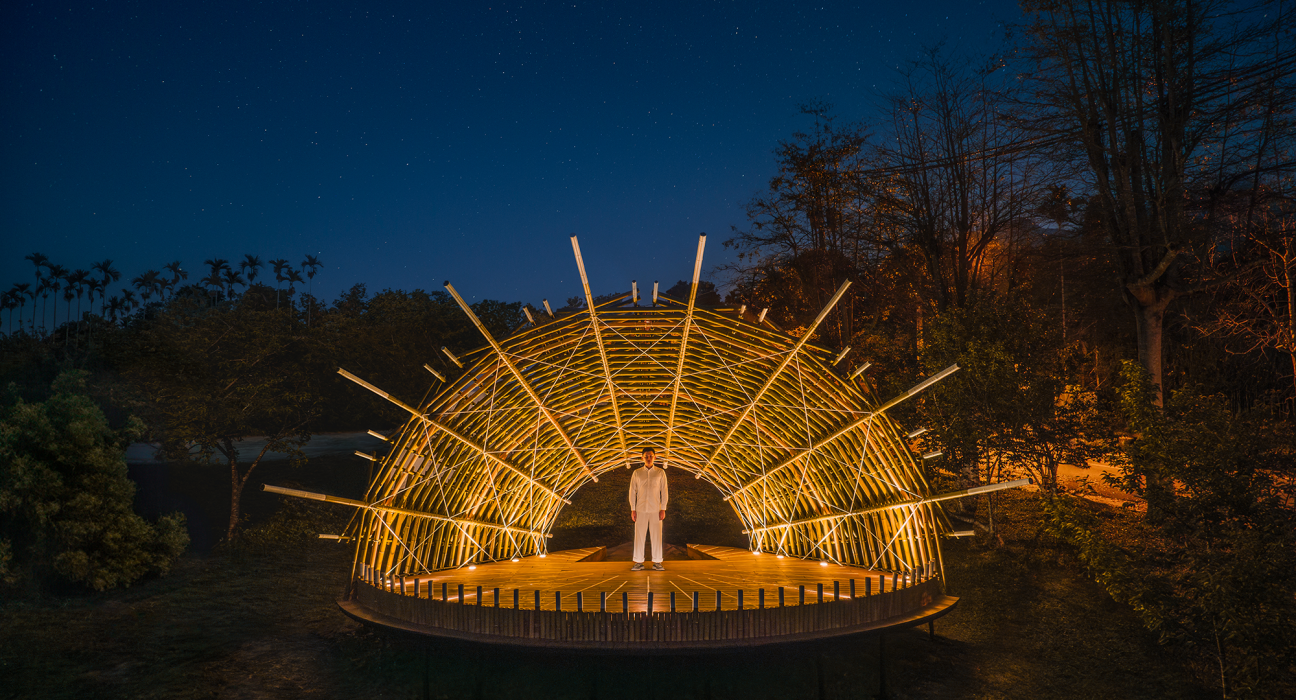
In Shima Park in Xiaobantian in Nantou, Taiwan, artist Cheng Tsung Feng has created a striking installation called Bamboo Theater. It re-imagines the traditional bamboo opera stages that were once central to Taiwanese temple festivals and community gatherings.
These bamboo stages were made from scaffolding and were usually temporary. They played an important role in performance and community rituals. Feng notes that these structures are disappearing, replaced by modern and standardised construction.
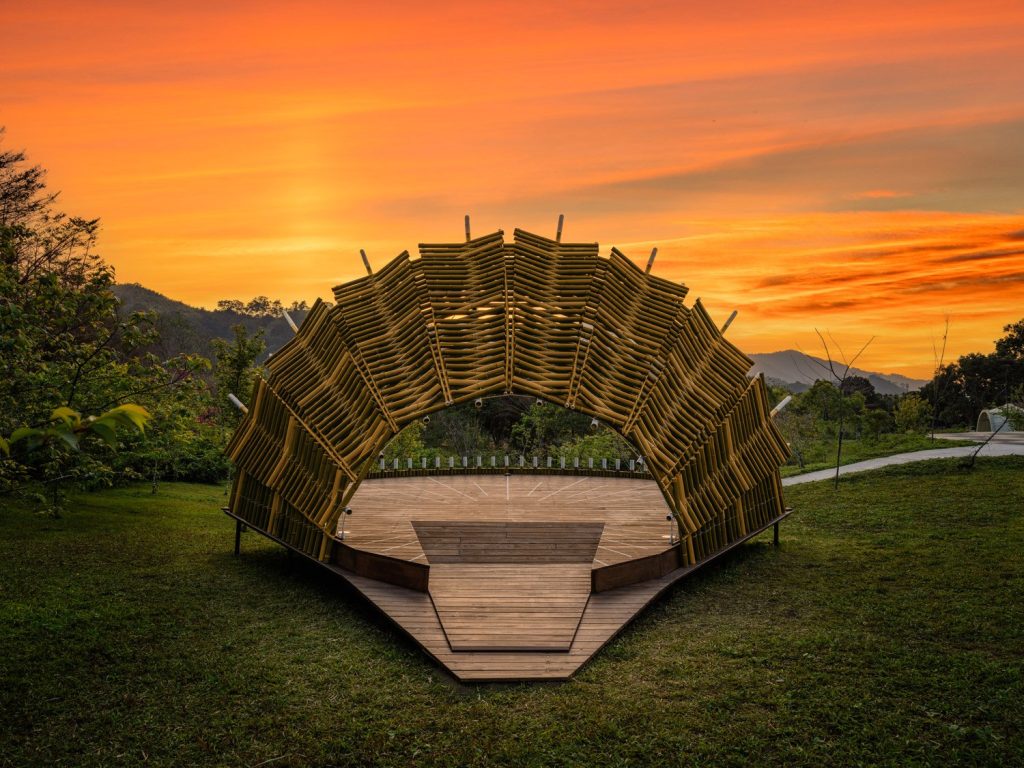
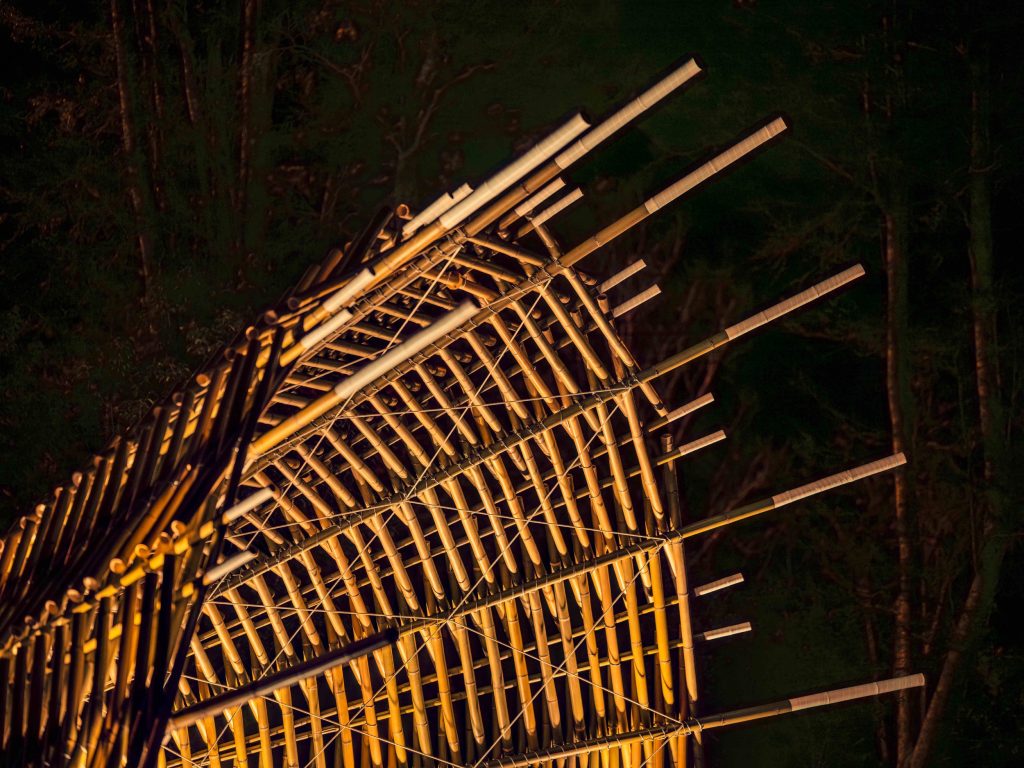
Bamboo Theater brings the traditional form back in a new way. Feng uses bamboo, wood, metal, rope and tape to build a semicircular backdrop. The bamboo poles vary in length and fan outward from the center of the rear wall. The result is an interwoven structure with a clear and gentle rhythm.
Thick and slender bamboo poles are bound with rope in a repeated pattern. The structure recalls traditional bamboo scaffolding but has a calm and contemporary presence.
At the front of the platform, the bamboo poles align in a clean row. Strips of white tape extend across the ground to continue the radial layout, visually connecting the stage to the surrounding park.
The theater is a functional public space. It supports community performances and cultural events. Visitors also use it as a shaded resting point during the day.
By combining traditional building methods with contemporary materials, Feng creates a link between cultural memory and present-day design. The installation becomes a living structure that serves as a memorial, a gathering place and a performance venue.
This project is part of Feng’s wider exploration of bamboo craft and cultural heritage. His installations often renew everyday craft by transforming it into architectural form.
Images courtesy of Cheng Tsung Feng and FIXER Photographic Studio.
Source: