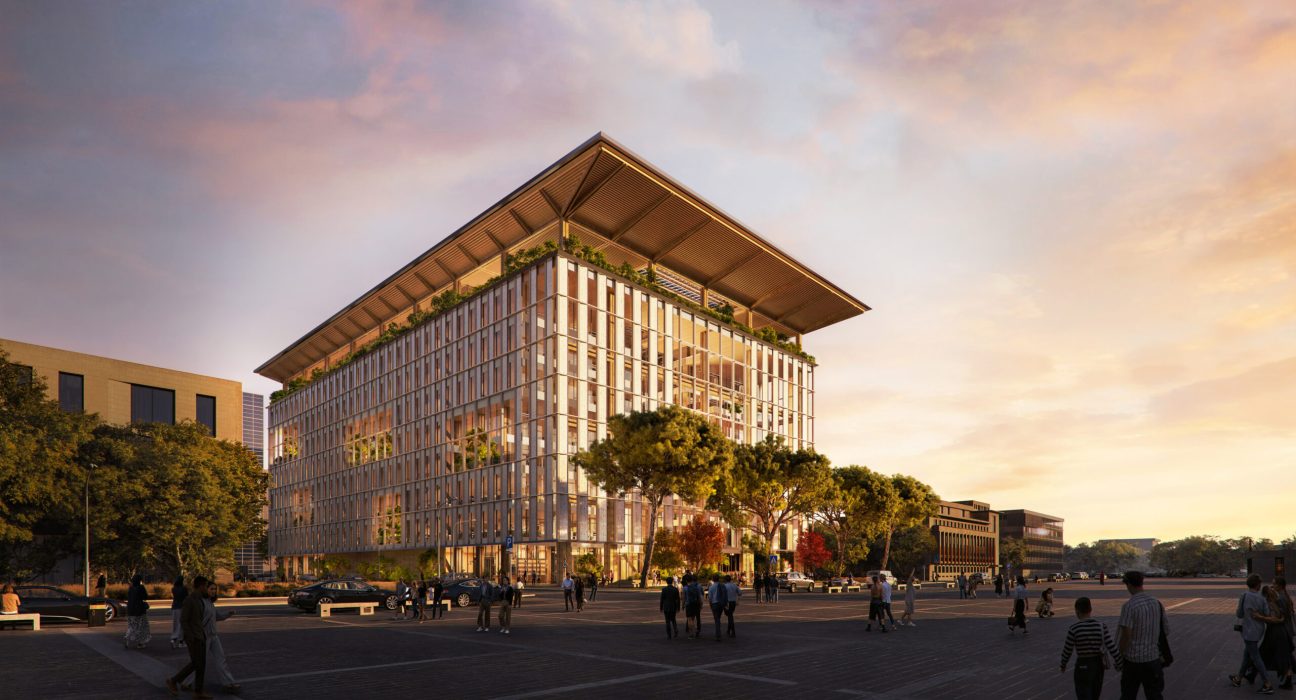
Public buildings rarely lead the way in energy innovation. They are often constrained by procurement rules, conservative design standards, and long approval cycles. Designed by PLP Architecture, Nexus Terrae challenges this pattern by showing how architectural thinking can embed climate strategy directly into civic buildings. Proposed as the new headquarters for the Italy’s Ministry of Environment and Energy Security in Rome, the project positions itself as an energy-positive public building rather than a symbolic gesture.
Rather than focusing solely on efficiency, the project is designed to generate more energy than it consumes during operation. This surplus is intended to feed back into the grid, reframing the role of government architecture from passive consumer to active contributor.
Designing surplus, not just efficiency
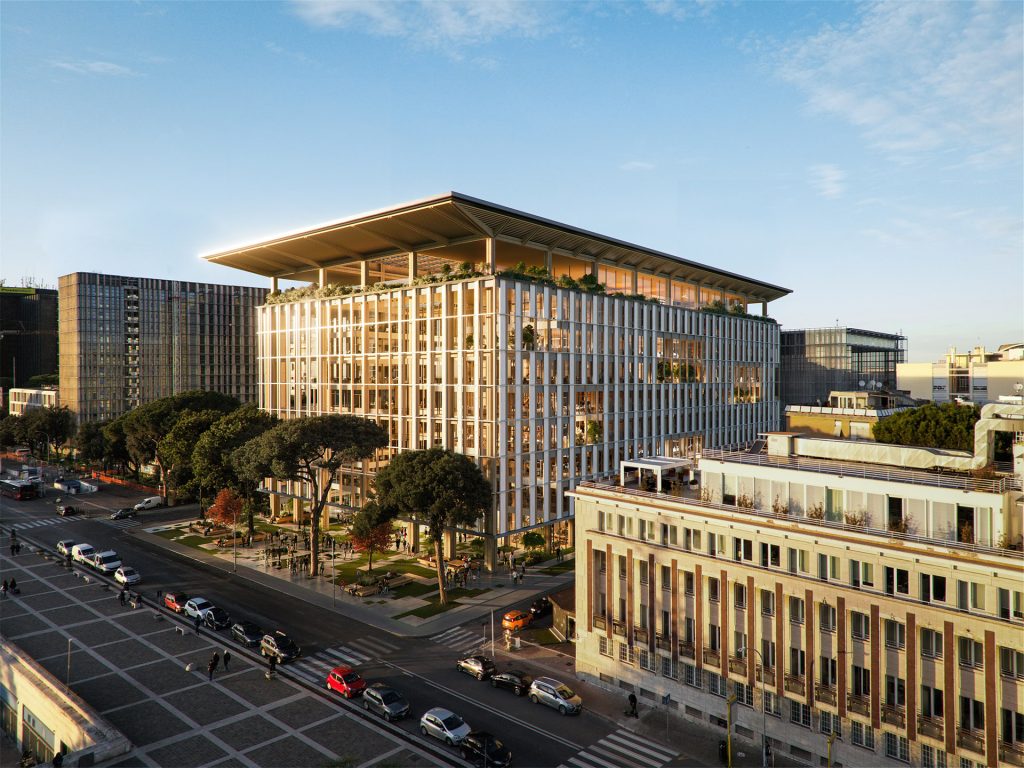
Most government buildings target compliance with energy codes or net-zero benchmarks. Nexus Terrae moves beyond this baseline by embedding energy surplus into the architectural concept itself.
The building prioritises demand reduction through passive strategies before adding renewable generation. High-performance envelopes, careful orientation, and shading reduce heating and cooling loads. Timber construction lowers embodied carbon while enabling faster, cleaner assembly compared to conventional concrete-heavy public buildings.
Only after demand is minimised does the project scale renewable energy systems to exceed operational needs. This sequencing is critical. Energy-positive performance cannot be achieved by technology alone.
Choosing materials as climate action
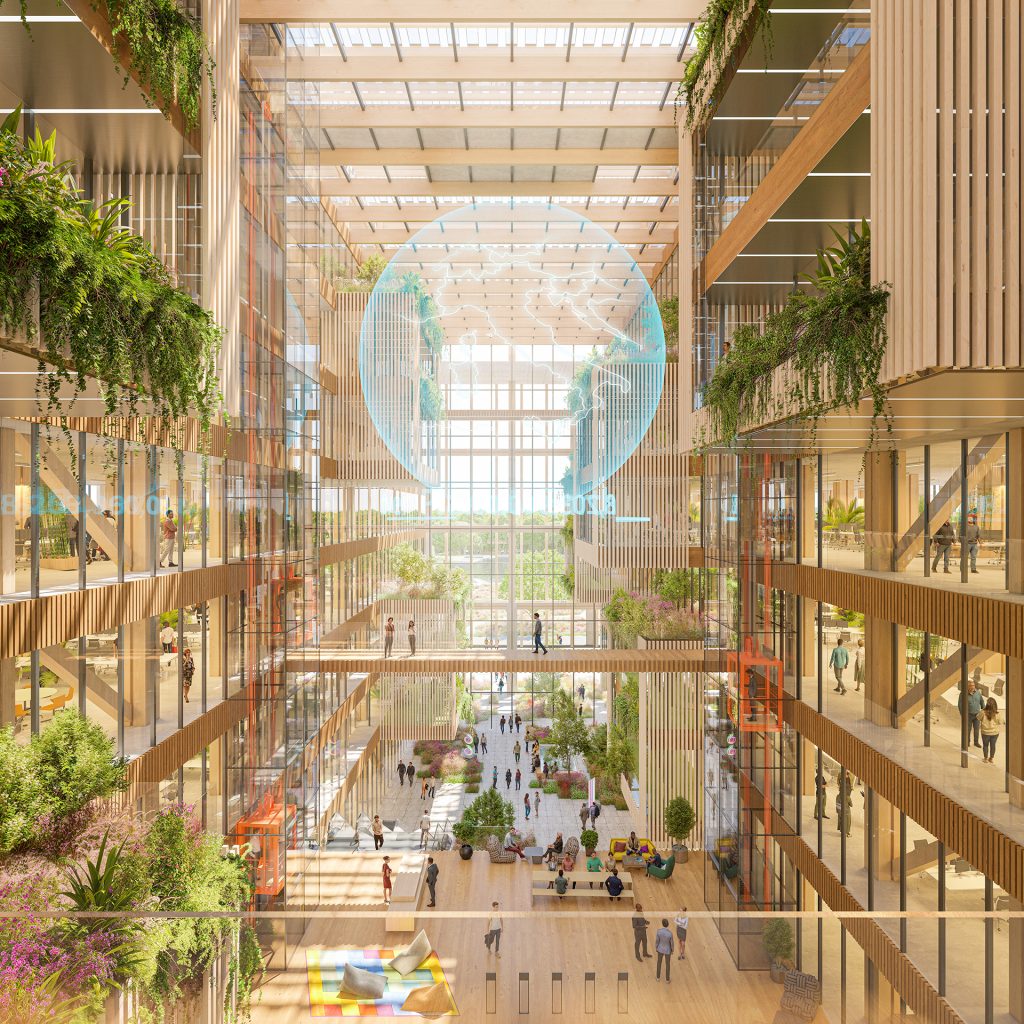
Timber sits at the core of the Nexus Terrae proposal, both as a structural system and as a climate response. Compared with steel and concrete, mass timber carries far lower embodied emissions and locks carbon into the building itself for decades.
For a public-sector project, this decision goes beyond technical performance. It shows how climate intent can be translated directly into construction choices, rather than treated as a separate sustainability layer. In this context, materials become part of policy, not decoration.
When public buildings set the standard
Public buildings have influence that extends well beyond their physical footprint. They help define industry norms, shape supply chains, and set expectations for what is considered achievable. When a government ministry commits to an energy-positive building, it signals that surplus energy performance is no longer experimental, but viable.
If delivered as planned, Nexus Terrae could shift how civic architecture is assessed. Climate performance would sit alongside form and symbolism, measured not by intent, but by impact.
From ambition to real-world performance
As with any energy-positive project, outcomes will ultimately depend on delivery and long-term use. Construction quality, day-to-day operation, occupant behaviour, and rules around exporting excess energy will all play a role in determining whether surplus targets are met.
Even so, Nexus Terrae represents a meaningful step forward. It frames energy-positive architecture not as a niche aspiration, but as a responsibility the public sector can reasonably take on.
Images courtesy of PLP Architecture.